
Affiliate Marketing vs Dropshipping
In today’s digital economy, two business models have become extremely popular among beginners and online entrepreneurs: affiliate marketing and dropshipping. Both offer the promise of earning money online without maintaining physical inventory, renting office space, or investing huge capital. However, even though they seem similar on the surface, they operate very differently. Understanding these differences is essential before choosing which model aligns best with your goals, skills, and long‑term vision.
What Is Affiliate Marketing?
 Affiliate marketing is a performance‑based business model where you promote someone else’s product or service and earn a commission for every sale, lead, or action generated through your unique affiliate link. You don’t handle product creation, shipping, customer service, or pricing. Your only responsibility is to drive traffic and influence people to make a purchase.
Creators, bloggers, YouTubers, and influencers often use affiliate marketing because it fits naturally into content creation. For example, a travel blogger recommending luggage or a fitness influencer promoting supplements can earn commissions whenever their audience buys through their links.
The biggest advantage is that affiliate marketing requires almost zero investment. You can start with a social media account, a blog, or even a simple landing page. Once your content ranks or goes viral, it can generate passive income for months or years.
What Is Dropshipping?
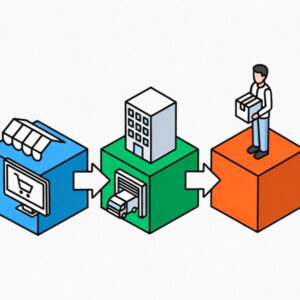 Dropshipping is an e‑commerce model where you sell physical products through your own online store, but you don’t keep any inventory. Operating as a middleman, you profit from the price markup while your supplier handles direct-to-consumer fulfillment for every order placed.
Unlike affiliate marketing, dropshipping gives you full control over branding, pricing, product selection, and customer experience. You can build a real online store, run ads, and create a brand identity that customers recognize.
However, dropshipping requires more involvement. You must manage customer queries, handle returns, and ensure smooth communication with suppliers. While the profit potential is higher, the workload is also greater.
Core Differences Between Affiliate Marketing and Dropshipping
Although both models allow you to earn online without stocking products, their structure, responsibilities, and earning potential differ significantly.
1. Ownership and Control
Affiliate Marketing: You promote someone else’s product. You have no control over pricing, quality, or customer experience.
Dropshipping: You own the store and the brand. You decide the pricing, product catalog, and marketing strategy.
2. What It Costs to Start
You barely need any money to get going with affiliate marketing. Anyone can kickstart their promotions for free just by using their everyday social media accounts.
Dropshipping: Low to moderate investment. You need a website, domain, and sometimes paid ads.
3. Income Model
Affiliate Marketing: You earn a fixed commission per sale or action.
Dropshipping: You earn profit margins, which can be adjusted based on your pricing strategy.
4. Customer Service
Affiliate Marketing: No customer service required. The brand handles everything.
Dropshipping: You must handle customer queries, complaints, and returns.
5. Risk Level
Affiliate Marketing: Very low risk because you don’t invest in products or logistics.
Dropshipping: Moderate risk due to refunds, supplier issues, and ad costs.
6. Branding Opportunities
Affiliate Marketing: Limited. You promote other brands.
Dropshipping: High. You can build your own brand identity and long‑term business.
Pros and Cons of Affiliate Marketing
Pros
- Extremely low startup cost
- No inventory or shipping responsibilities
- Passive income potential
- Easy to scale through content
Flexible — you can promote multiple niches
Cons
No control over product quality or pricing
- Commission rates can change anytime
- Requires trust and audience building
- Highly competitive in popular niches
Pros and Cons of Dropshipping
Pros
- Full control over branding and pricing
- Higher profit margins compared to affiliate commissions
- No need to buy inventory upfront
- Easy to test new products and trends
- Can grow into a long‑term e‑commerce brand
Cons
- Customer service responsibilities
- Supplier delays can affect your reputation
- Requires more setup and management
- Profit margins can shrink in competitive niches
- Selecting the Optimal Route
The most suitable alternative is entirely contingent upon your personal disposition, current competencies, and overarching long-term ambitions. 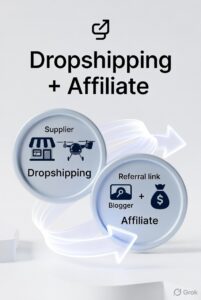
Choose affiliate marketing if you:
∗ Enjoy creating content
∗Want passive income
∗Don’t want to handle customer issues
∗Prefer a low‑risk, low‑investment model
Choose dropshipping if you:
∗Want to build a brand
∗Are comfortable managing customers
∗Can invest time in running a store
∗Want higher earning potential
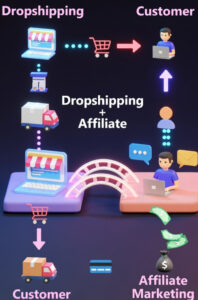
Both models can be profitable, and many entrepreneurs even combine them. For example, a blogger may run affiliate links while also selling dropshipped products through their own store.
Affiliate marketing and dropshipping are two powerful online business models that allow anyone to start earning without traditional business barriers. Affiliate marketing is ideal for creators who want passive income with minimal effort, while dropshipping suits those who want to build a brand and earn higher profits. Understanding the differences helps to choose the path that aligns with strengths and long‑term vision.